
Alright, so folks sometimes ask me about these tarot card things, especially the ones for love. They seem to think there’s some special trick to it, like a secret map to happily ever after. I gotta tell you, my journey into this whole “love spreads” business wasn’t exactly planned out with a fancy PowerPoint presentation.
I kinda just fell into it. You remember that one particularly grim winter? Yeah, the one where it felt like the world hit pause and everyone was just stuck, staring at their own four walls. Well, I was right there with ’em, nursing a pretty nasty heartbreak. The kind that makes you question everything and eat way too much ice cream.
How It All Started
So, there I was, peak mopey. I stumbled across this old tarot deck, one my aunt had given me ages ago. It was just sitting there, collecting dust. Figured, “Eh, can’t hurt. Things are already pretty crummy.”
My first attempts? Pure chaos. I was just flipping cards, looking at the pictures, and getting absolutely nothing that made sense. So, like anyone these days, I hit the internet. Typed in “tarot for love.” And wow, what a rabbit hole that was. It was like a digital flea market, full of self-proclaimed psychics, complicated charts, and courses that cost more than my last decent meal.
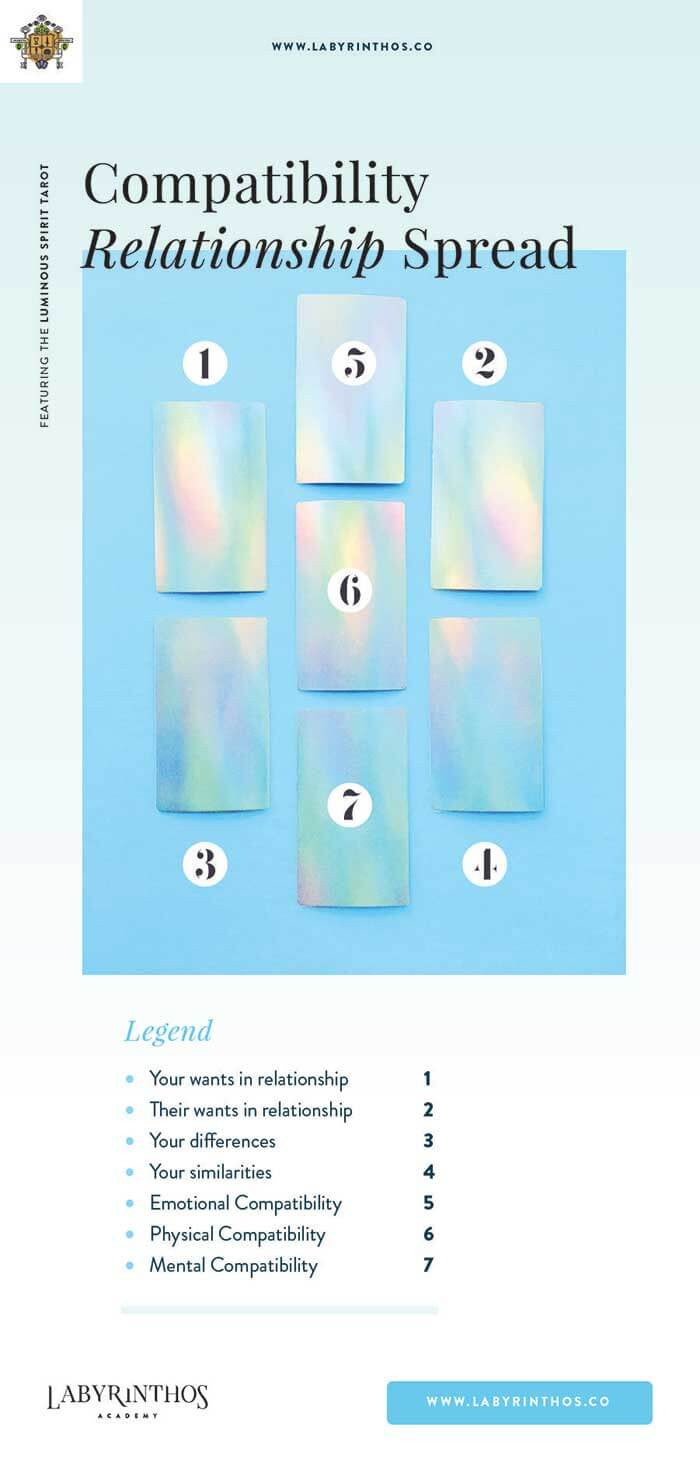
I decided to dial it way back. Started with the super basic stuff. You know, like three-card pulls. I’d ask simple things: “What’s up with me?”, “What’s up with this situation?”, “What’s the general vibe here?” Stuff like that. Sometimes I’d do a “Me, Them, The Connection” type of thing if I was feeling brave.
The So-Called “Spreads”
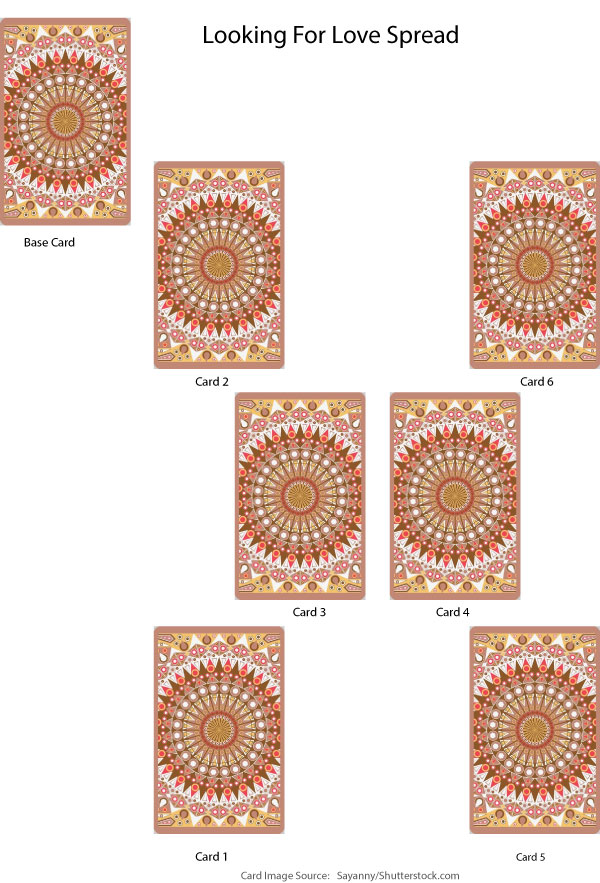
After a while, I noticed something. A lot of those fancy “love spreads” I saw online or in books – you know, the ones with names like “The Twin Flame Destiny Unveiled Spread” or “The Eternal Heartbond Compass” – they were mostly just jazzed-up versions of the simple stuff. More cards, sure, but often leading to more head-scratching than actual insight. It felt like quantity over quality, most of the time.
I got myself a few different decks over time. Some are all soft and dreamy, full of pastel colors and gentle imagery. Others are pretty blunt, almost stark. But honestly, my go-to, the one I still use most? The good old Rider-Waite-Smith. No frills, no glitter. It just works. It’s like the trusty hammer in a toolbox full of weird, specialized gadgets.
I remember this one time, I found this incredibly complex spread in some old, musty book. It was called something like “The Seven Gates of Venus Love Oracle.” Took me, no joke, nearly an hour just to lay all the cards out correctly. Then another couple of hours trying to figure out what it all meant. And the grand revelation after all that work? Something along the lines of “you should probably talk about your feelings more.” Gee, thanks. Could’ve gotten that from a single card and saved myself an afternoon.
What I Actually Learned
The biggest thing I figured out, and this took a while, is that the cards aren’t fortune cookies. They don’t just spit out a pre-written future, especially with something as wild and unpredictable as love. They’re more like mirrors. They reflect what’s already bubbling under the surface – your hopes, your fears, the patterns you keep falling into, the stuff you’re not admitting to yourself.
When I started doing readings for friends, that became even clearer. Someone would get all starry-eyed over The Lovers card, thinking “This is it! True love!” And I’d have to point out, “Yeah, but see that Ten of Swords right next to it? Or that grumpy-looking Hermit on the other side? Might mean there’s some tough stuff to work through first, or maybe you need some alone time to figure things out.”
It stopped being about predicting if “he’ll call” or “she’s the one.” It became more about exploring. What do I actually want? What am I bringing to this? What does a healthy relationship even look like for me right now? The cards became prompts for those kinds of questions.
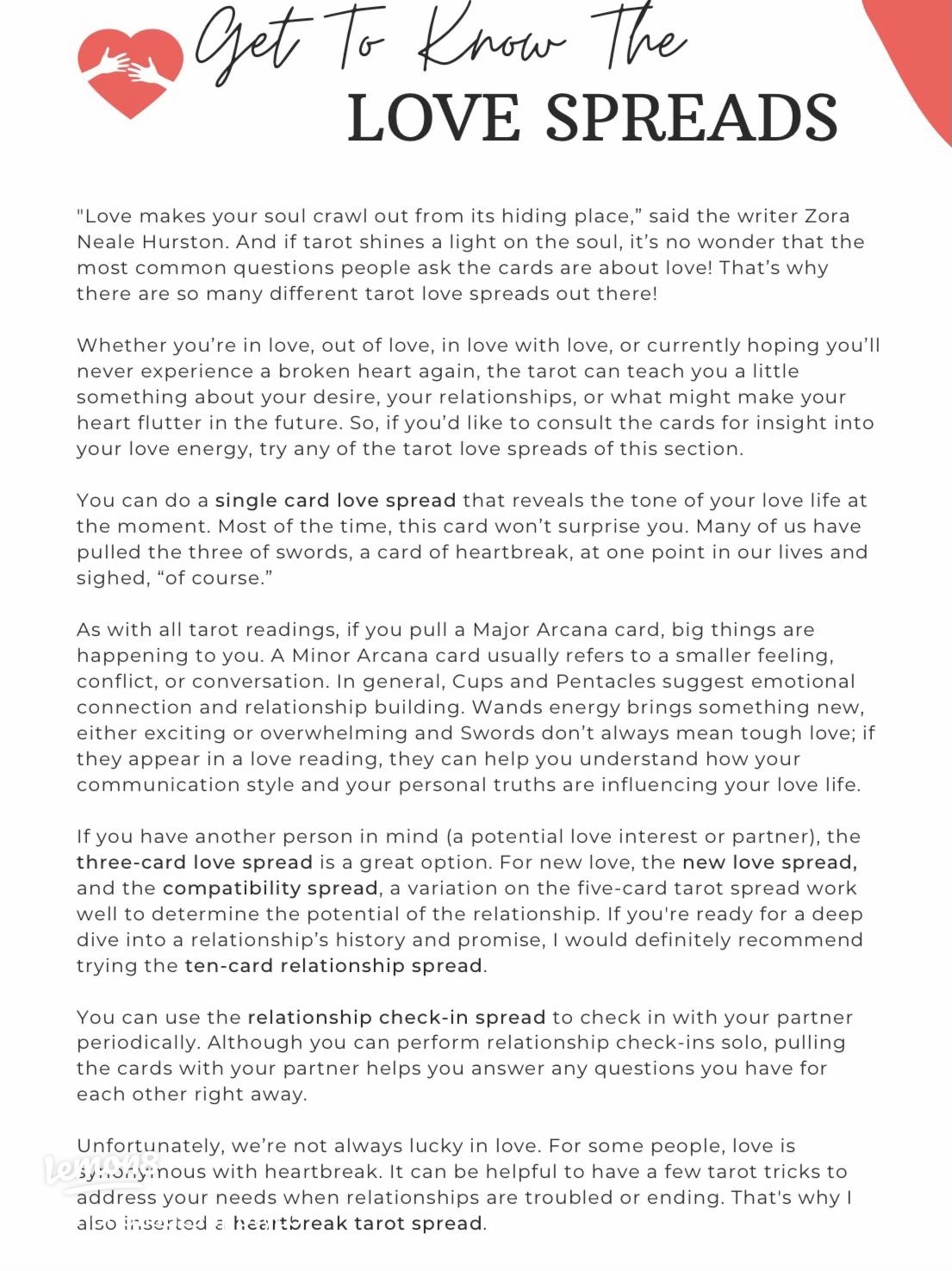
So, these “love spreads”… they’re tools. Frameworks. But the magic isn’t in the spread itself. It’s in how you use it, how honest you’re willing to be, and what questions you’re brave enough to ask. I stopped hunting for the “perfect” spread. I learned to keep it simple, ask direct questions, and trust that little nudge in my gut when I was looking at the cards. Sometimes I’d just make up a layout on the spot, whatever felt right for the moment.
It’s a practice, you know? It’s not like learning to bake a cake with a fixed recipe. And it for sure didn’t magically mend my broken heart in a week. But it gave me a way to sit with the mess, to poke at it, to understand it a bit better. And I guess, in the long run, that helped me more than any perfectly arranged set of cards ever could.